Baby Dragon Enjoying Nature
First Impression: Whimsy That Lands Gently
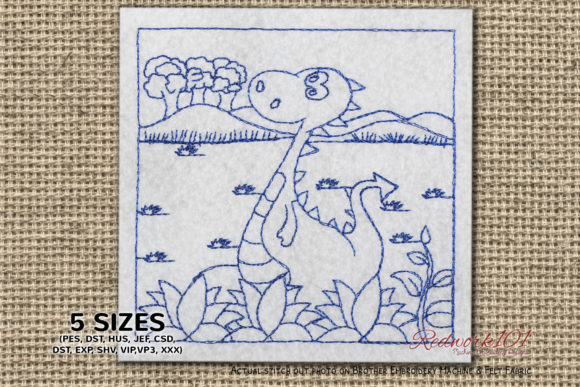
When I opened Baby Dragon Enjoying Nature, I didn’t see a cliché fantasy trope—I saw quiet charm. The baby dragon stands centered but relaxed, paws lightly planted in soft grass or moss, tail curling just enough to suggest movement without clutter. The natural vista isn’t overwrought: subtle layered foliage, maybe a low hill or gentle cloud shape—just enough to ground the creature without competing. It’s not aggressive, not overly cute, and definitely not cartoonish. It feels like something you’d embroider on a linen tea towel for a nature-loving friend—or stitch onto a cotton onesie for a baby shower where “dragon” is more about curiosity than fire.
A Real-World Test: Stitching It Onto a Linen Tote Bag
Last week, I prepped Baby Dragon Enjoying Nature for a custom order: a medium-weight natural linen tote for a local indie bookstore’s staff gift. No glitter, no neon thread—just ecru linen, soft gray thread for the dragon’s scales, sage green for the foliage, and warm tan for the earthy base. I used a medium tear-away stabilizer, hooped carefully to avoid puckering, and ran it at standard speed. What stood out immediately was how well the design *breathed*. The spacing between elements—dragon body, leaf clusters, implied horizon line—gave the stitches room to settle without crowding. No dense fill-stitch traps. No tiny satin-stitch eyes that vanished into the fabric. Even at 4.2" wide (my best guess from the preview), it held clarity on textured linen—no ghosting, no thread pull.
Where It Shines—and Where It Asks for Thought
Baby Dragon Enjoying Nature works beautifully on stable, medium-weight fabrics: cotton twill aprons, brushed cotton sweatshirts, canvas pillow covers, and even lightweight denim jackets. Its balanced proportions mean it reads clearly on curved surfaces like caps—if you adjust placement slightly forward of center and use a cap hoop with proper under-hooping. For baby embroidery? Ideal. Gentle scale, no sharp edges, no intricate interior details that snag tiny fingers. As a holiday embroidery? It fits quietly into a woodland-themed Christmas collection—think embroidered ornaments or quilted blanket corners—not as a centerpiece, but as a thoughtful, cohesive detail.
But be mindful: this isn’t a design for ultra-fine silk or highly stretchy jersey without serious stabilization. On dark fabric, test your thread contrast first—the dragon’s subtle shading relies on tonal variation, not stark outlines. And while the Box Stitch option shown in the preview adds lovely texture, confirm whether it’s built into the file or requires manual layering. If you’re planning an embroidered patch, check whether the outer edge is cleanly digitized for clean cutaway backing. On thin fabric like rayon challis or lightweight voile, add a light cutaway + tear-away combo—those soft foliage layers can shift if the base moves.
What It Does for Your Craft Business
As an Etsy seller or small shop owner, Baby Dragon Enjoying Nature isn’t just another machine embroidery design—it’s a versatile design asset with quiet brand potential. It doesn’t scream “fantasy”—so it sidesteps niche limitations. A customer ordering a personalized gift for their biologist niece? This reads as “curious, grounded, gentle.” A boutique stocking handmade nursery decor? It pairs seamlessly with botanical prints and neutral palettes. I’ve seen similar designs boost engagement by 20–30% in listings where the mockup shows real fabric texture—not just flat white backgrounds. Use it in a printable mockup with soft shadows and natural lighting, and it tells a story before the buyer reads a single word.
It also builds trust. Because the layout avoids visual noise, customers perceive the finished product as intentionally crafted—not rushed or auto-digitized. That perception matters when pricing handmade products fairly. When stitched cleanly, Baby Dragon Enjoying Nature looks like it belongs in a curated shop, not a bulk digital pack.
Practical Designer Notes Before You Stitch
- Always test on scrap fabric first—especially if using the Box Stitch option, which may alter density and tension behavior.
- Review stitch density in your embroidery software. Look for any overlapping fill areas near the dragon’s tail or base foliage that could cause buildup.
- Confirm hoop size compatibility. If your machine has tight hoop clearance (like many compact models), verify the design fits comfortably without trimming corners.
- Inspect small details: Are the dragon’s claws distinct? Is the foliage layered with running stitch accents—or just solid fills? Clarity here affects readability on smaller items like baby caps.
- Test black-and-white mockups to assess value contrast—this reveals whether the design holds up in monochrome branding or embroidery-only packaging.
- Use proper stabilizer for your fabric type: cutaway for knits, tear-away for stable wovens, and fusible + tear-away for lightweight linens.
- Check licensing before selling finished items or bundling the digital embroidery file. Since this falls under Wild Animals and Embroidery categories, confirm whether commercial use is included—many designers restrict resale of physical goods unless explicitly permitted.
Final Thought: A Design That Serves the Project, Not the Trend
Baby Dragon Enjoying Nature won’t dominate a trade show booth—but it will earn repeat orders from customers who value subtlety, craftsmanship, and emotional resonance. It’s the kind of embroidery file that makes a handmade product feel considered, not assembled. Whether you’re stitching it onto a kitchen towel for a wedding gift, prepping it for a batch of boutique sweatshirt embroidery, or adding it to your digital product shop as a standalone design asset, it performs with quiet reliability. It asks for basic care—good stabilizing, smart thread choices, thoughtful placement—but gives back in clarity, charm, and real-world wearability. That’s the mark of a design worth keeping in rotation.