Bear Standing in Jungle Lineart Design
A Practical Review for Small Business Embroidery Use
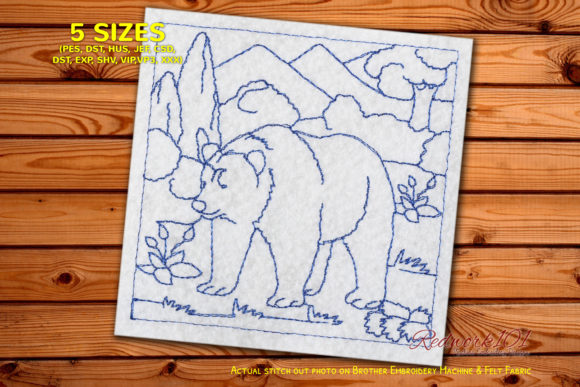
As an embroidery designer who’s developed hundreds of commercial designs for cafés, boutiques, pet brands, florists, and handmade studios, I approach every new machine embroidery design with two questions: “Will it hold up on real garments?” and “Does it strengthen the brand—not distract from it?” That’s why Bear Standing in Jungle Lineart Design caught my attention. At first glance, its title and description—“A majestic bear with a beautiful hilly background”—suggest a balance of strength and serenity. For small business merch, that duality matters. It feels friendly but grounded, rustic yet refined—not overly cartoonish or stiffly formal. That makes it unusually versatile across apparel categories.
Where Bear Standing in Jungle Lineart Design Shines in Real Business Applications
This design excels where clarity, character, and quiet confidence are needed. On embroidered patches for staff uniforms—think aprons at a local bakery or tote bags for a nature-themed florist—it reads instantly without overwhelming. The lineart style avoids heavy stitch density, which means cleaner results on cotton twill, canvas, and medium-weight denim. As a chest logo on work shirts or a sleeve accent on custom apparel, Bear Standing in Jungle Lineart Design adds artisanal warmth without looking DIY or unpolished. For cap embroidery, the upright bear silhouette scales well to 2.5"–3" front placements—especially when the optional Box Stitch is omitted for cleaner edges.
It also works beautifully as a branded product add-on: stitched onto kraft paper gift tags, woven into linen tea towel hems, or centered on reusable produce bags sold by a sustainable grocer. Because it leans into Wild Animals without cliché (no roaring mouths or exaggerated claws), it supports brand identity for businesses that value authenticity over flash. Customers associate thoughtful animal motifs with care, craftsmanship, and intention—traits that directly boost trust and perceived product value.
Use With Care: Critical Considerations for Production
Not all surfaces or sizes suit Bear Standing in Jungle Lineart Design equally. Avoid placing it smaller than 1.75" tall on curved areas like cap fronts or rounded tote bag corners—the hilly background detail may blur or lose definition. On dark uniforms (navy, charcoal, black), confirm thread color contrast before stitching; light tans or muted forest greens often outperform stark white for readability and longevity. If your fabric has heavy texture—like bouclé, burlap, or thick corduroy—test stabilizer pairing first. A medium tear-away plus light cutaway combo usually preserves line integrity better than tear-away alone.
Also note: the description mentions “The Box Stitch shown in the picture is optional. The color of the outer box is a differe…”—this suggests visual ambiguity in the source file. Before committing to bulk production, verify whether the box is part of the core design or a mockup overlay. If it’s embedded, assess whether it competes with the bear’s presence. For apron embroidery or boutique merchandise, clean lines typically convert better than decorative borders.
How This Design Strengthens Brand Identity and Customer Engagement
Bear Standing in Jungle Lineart Design doesn’t shout—it invites. That’s powerful for small businesses competing on connection, not volume. When stitched on a café’s barista apron or a pet brand’s bandana, it signals calm competence and natural quality. Visually, it anchors a cohesive look: pair it with earth-toned thread palettes and minimalist typography, and you’ve got instant visual consistency across digital embroidery files, printable mockups, and finished product photography. Etsy sellers report higher engagement when using animal motifs that feel intentional—not generic—because buyers equate specificity with handmade product integrity.
Importantly, this design avoids trend fatigue. Unlike hyper-stylized or meme-inspired graphics, Bear Standing in Jungle Lineart Design carries classic appeal. That means your embroidered patch, tote bag design, or cap embroidery stays relevant across seasons—and supports long-term brand recognition without needing constant redesign.
Essential Embroidery Designer Notes Before You Stitch
- Test in black and white first—lineart relies on contrast, not color. If it reads clearly in monochrome, it’ll translate reliably across thread colors and fabrics.
- Check minimum viable size—stitch a 1.75" version on scrap fabric matching your target garment. Does the bear’s stance remain distinct? Do hill contours stay legible?
- Review thread color contrast—especially for high-wash items like staff aprons. Opt for matte-finish threads (like polyester) over glossy rayon for durability.
- Inspect spacing and underlay—tight curves around the bear’s ears or paws need adequate underlay to prevent puckering on stretchy or lightweight fabrics.
- Confirm hoop size compatibility—if your embroidery machine uses smaller hoops (e.g., 4" x 4"), ensure the design fits comfortably without re-hooping mid-stitch.
- Test on real fabric—not just stabilizer swatches. Fabric texture dramatically affects how lineart resolves.
- Create a client-approved mockup—use a digital embroidery file preview layered on a photo of the actual garment. This prevents costly revisions later.
- Compare beside other design assets—does Bear Standing in Jungle Lineart Design harmonize with your existing logo, packaging, or website palette?
- Verify commercial licensing—since this is intended for small business merch, custom apparel, and commercial embroidery, ensure the digital embroidery file includes rights for resale and branding use.
Final Thought: A Quietly Confident Choice
Bear Standing in Jungle Lineart Design isn’t flashy—but it doesn’t need to be. In the world of small business merch, reliability, adaptability, and subtle storytelling win more customers than novelty alone. Whether you’re stitching embroidered patches for a creative studio, adding cap embroidery for a hiking gear shop, or finalizing apron embroidery for a farm-to-table eatery, this design delivers quiet professionalism with room for personality. Just remember: great embroidery starts with smart prep—not just pretty files. Test, compare, stabilize, and verify. Then let the bear stand tall—for your brand.